Loading...
Serving Great Falls, MT and surrounding areas. (406) 216-6060
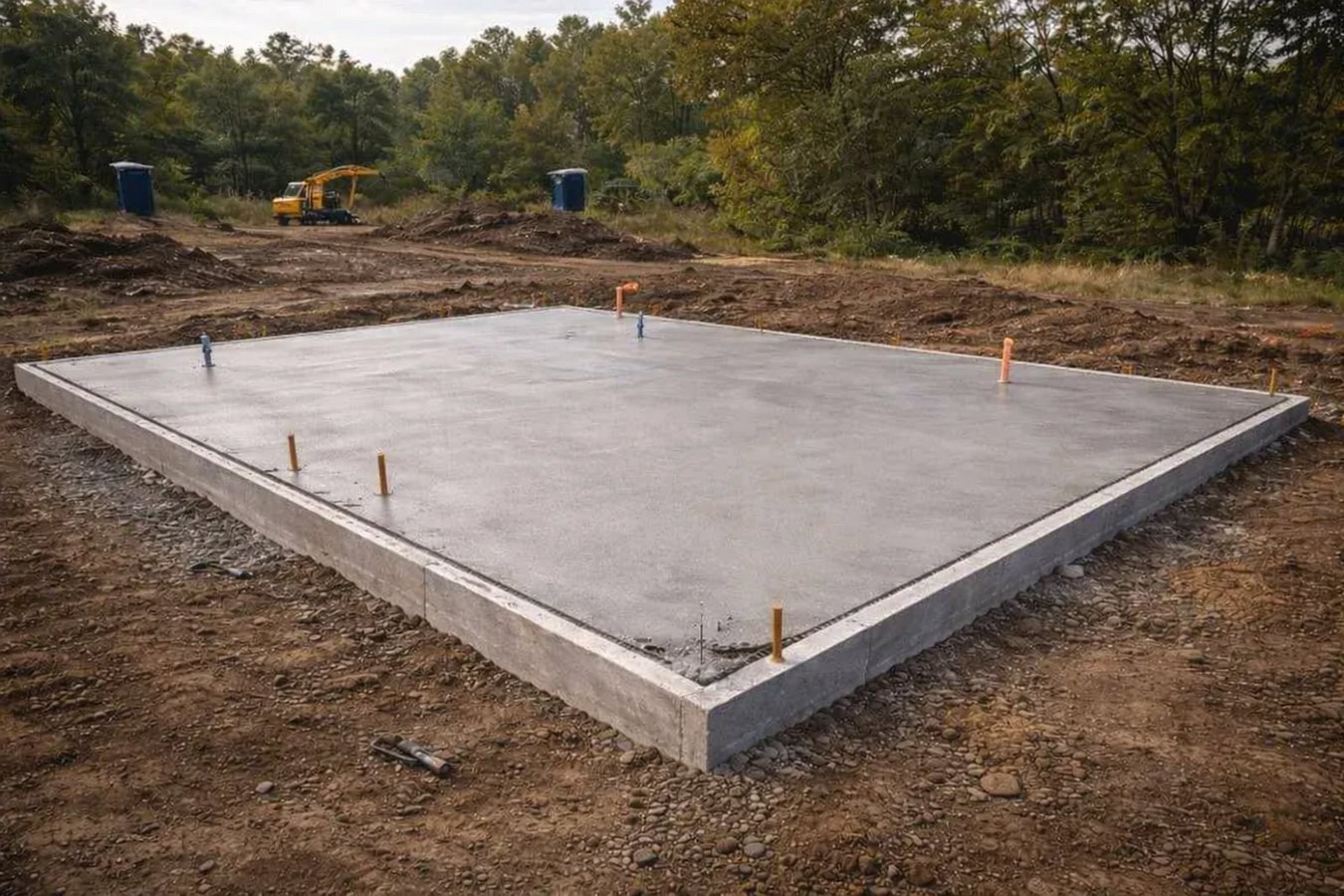
New build or replacement slab? We handle permits, soil preparation, reinforcement, and the pour - with curing methods designed for Great Falls clay soils and Montana freeze-thaw conditions.
Slab foundation building in Great Falls means excavating and grading the site, compacting the subgrade, laying a gravel base and moisture barrier, installing steel reinforcement, and pouring the concrete slab - most residential projects run one to two weeks on-site from first shovel to finished pour, with full strength reached after 28 days.
Whether you are starting a new home, adding a garage, or replacing a slab that was poured decades ago without modern reinforcement, slab foundation building in Great Falls requires extra attention to soil preparation. The clay-heavy soils in Cascade County expand and shrink with moisture, and that movement is one of the leading causes of slab failure in this area. Getting the base right is what separates a slab that holds for 30 years from one that starts cracking in five.
Many projects also require concrete footings placed below the 48-inch frost line before the slab can be poured - your contractor should assess this during the estimate visit.
Hairline cracks in a concrete floor are usually cosmetic, but wide cracks - especially ones running diagonally or growing larger over time - suggest the soil beneath the slab is shifting. In Great Falls, the clay-heavy soils that expand and contract with moisture changes are a common culprit. Waiting extends the damage and complicates any future repair.
If you notice your floor sloping in spots or interior doors sticking and swinging open on their own, the slab may have settled unevenly. This kind of movement is more common in Great Falls than in many other places because of the region's soil conditions and intense freeze-thaw cycles. A contractor can assess whether repair or replacement is warranted.
Damp spots, white chalky deposits (called efflorescence), or a persistent musty smell near the floor can mean moisture is migrating up through the slab. This happens when the moisture barrier under the slab has failed or was never properly installed. In Great Falls, the problem tends to appear in April and May when spring snowmelt saturates the ground.
If you are constructing a new home, garage, or large addition in Great Falls - or replacing a structure that sat on an old slab - you need a new foundation built to current standards. An older slab poured decades ago may lack modern reinforcement and moisture protection, making it unsuitable for reuse without professional evaluation.
We build slab foundations for new homes, garages, additions, and detached outbuildings throughout Great Falls and the surrounding area. Every project starts with a proper site assessment - checking soil conditions, grading requirements, and equipment access - before we commit to a design or a price. The concrete mix, slab thickness, and reinforcement layout are specified for the actual conditions on your property, not a generic residential default.
For projects that need structural footings below the slab, we coordinate that work as part of the same project so nothing is missed. If you are building a new home and need a complete structural base, our foundation installation service covers basement and crawl space foundations for larger residential projects as well.
Best for new home construction, garage builds, or large additions that need a structural concrete base from scratch.
For homeowners removing an older slab that was poured without modern reinforcement or moisture protection.
Sized and reinforced for vehicle loads and Montana winters - built thicker where it matters without unnecessary cost.
Great Falls sits in a climate zone where temperatures can swing dramatically between seasons and hard freezes arrive early. Concrete poured in freezing temperatures fails to cure properly, producing a weak slab that cracks prematurely - which is why the reliable pour window here runs only from late May through early September. Beyond weather, the clay-heavy soils common across Cascade County expand when wet and shrink when dry. A contractor who understands these local conditions will add a deeper gravel base and extra reinforcement to compensate for that soil movement before the concrete is ever placed. The American Concrete Institute provides the industry standards that guide this work.
Properties near the Missouri River or in lower-lying parts of Great Falls face an additional challenge: higher groundwater levels that push moisture upward through the slab if the barrier layer underneath is not installed correctly. Homeowners in Lewistown and Havre face similar soil and freeze-thaw conditions, and the same preparation principles apply across north-central Montana. Cascade County requires building permits for all new foundation work - ask your contractor to confirm they will handle the permit application and coordinate the required inspections before the pour.
We respond within 1 business day. We will ask about the size of the slab, what it is for, and whether you have existing plans. A site visit comes before any written estimate so we can assess soil conditions and equipment access.
We visit your property, evaluate the grade and soil, and provide a written estimate covering every line item - excavation, gravel base, moisture barrier, reinforcement, pour, and cleanup. No guesses, no surprises.
We apply for the required City of Great Falls building permit and schedule the pour once it is approved. Site prep includes excavating, compacting the subgrade, laying the gravel base, installing the moisture barrier, and setting up all reinforcement - the most critical stage of the job.
On pour day we fill the forms, spread and finish the surface, and begin curing protection appropriate for the current weather. We walk you through the finished slab, point out the control joints, and explain what normal curing looks like in the weeks ahead.
We respond within 1 business day. Site visit and written quote at no charge - no obligation.
(406) 216-6060We carry general liability insurance and workers compensation on every job. Permitted work means a city inspector signs off on the base prep before any concrete is poured - protecting your investment before it is ever buried.
We are a local company, not a national franchise dispatching crews who have never worked in this climate. We know the clay soils, the short pour window, and what Montana winters actually do to a slab over time.
Great Falls has one of the most demanding climates for concrete in the Northwest. We monitor forecasts before every pour and have a curing protection plan ready - because a slab poured in the wrong conditions fails before the season is out.
The soil under the slab matters as much as the concrete itself. We follow American Concrete Institute guidance on subgrade compaction and base depth, and we do not rush this step - it is where most long-term slab failures start.
Every slab we pour is designed for the specific site - not a generic residential spec. That means the right base depth, the right reinforcement, and the right curing plan for the weather on pour day, so your foundation performs over decades of Great Falls winters rather than just the first few.
Full basement and crawl space foundation installation for new builds and additions in Great Falls, built to Montana frost-depth requirements.
Learn moreFrost-depth footings for decks, additions, and new structures - placed below the 48-inch freeze line that Great Falls winters demand.
Learn moreThe summer construction window fills fast - reach out now to lock in your start date before the season books up.