Loading...
Serving Great Falls, MT and surrounding areas. (406) 216-6060
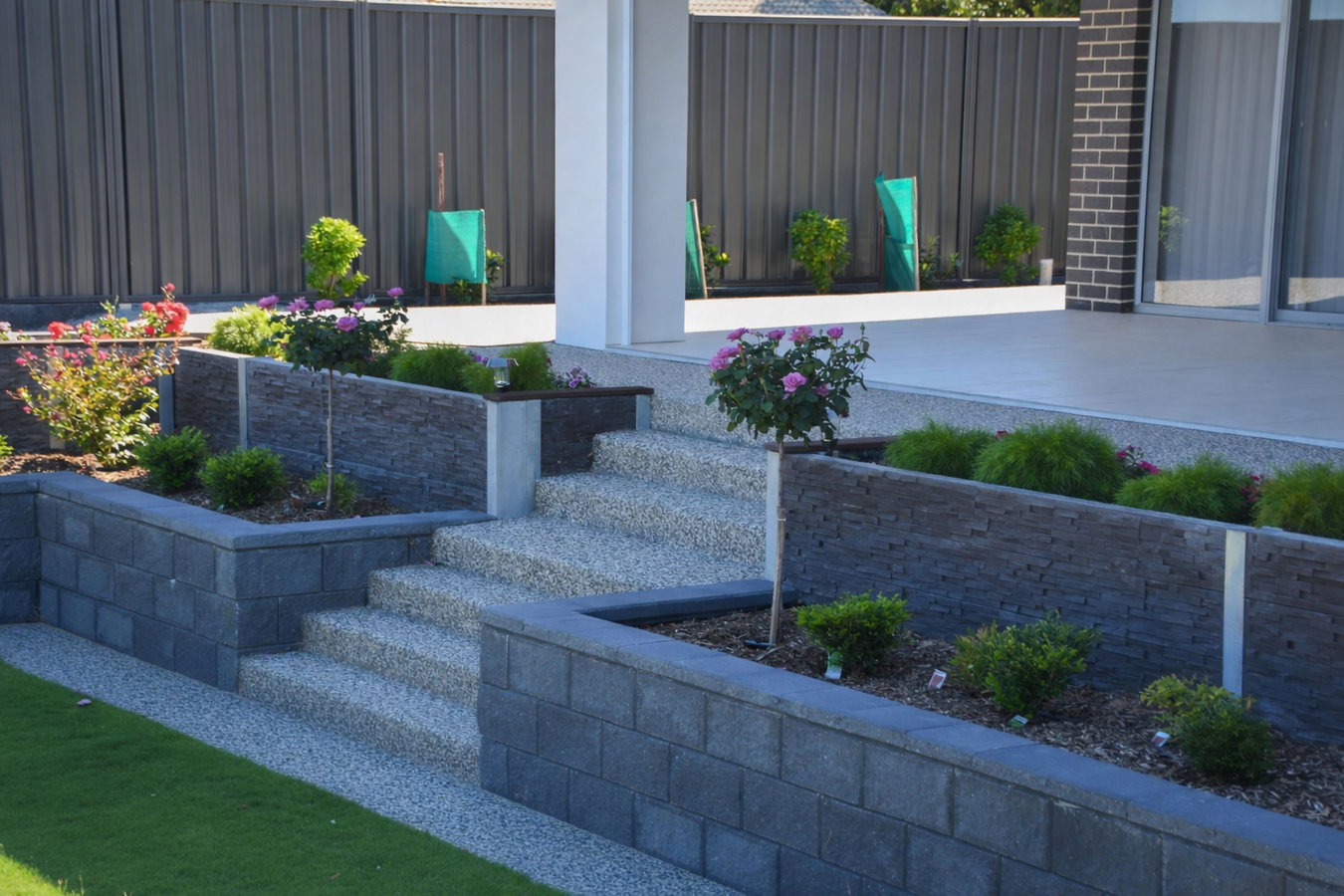
Soil sliding toward your home or an old wall that is leaning? We build concrete retaining walls with frost-depth footings and proper drainage so the wall holds through decades of Montana winters, not just one season.
Concrete retaining walls in Great Falls hold back soil on sloped lots, stopping erosion and protecting foundations - most residential wall projects take one to three days on-site, with a curing period of about one week before full backfilling and use.
If you have a slope that is washing toward your home, an old wall that is leaning, or a yard you cannot use because of grade changes, a properly built retaining wall is often the most practical fix. Great Falls properties near the Missouri River bluffs and rolling terrain throughout Cascade County regularly deal with exactly this kind of grade challenge - it is not an unusual problem here.
Homeowners who want to add function to sloped lots sometimes pair a retaining wall with concrete floor installation on a new terrace or patio area - turning an unusable slope into a flat, finished space.
Bare patches appearing after rain or snowmelt, or mulch and topsoil migrating downhill, mean your slope is eroding. In Great Falls, spring snowmelt can move a surprising amount of soil fast, and what starts as a cosmetic problem can become a foundation issue if nothing is done.
A wall that tilts even slightly toward the downhill side means the pressure behind it is winning. Diagonal cracks running from corners, or gaps opening between the wall and the ground, are signs the wall has moved and is no longer doing its job safely.
If water consistently collects against your home after a storm or during spring thaw, the grade around your house may be directing water toward you instead of away. A retaining wall combined with regrading can redirect that flow and protect your foundation from long-term moisture damage.
White mineral deposits on a concrete wall - sometimes called efflorescence - mean water is moving through the concrete and carrying minerals with it. This is an early warning that drainage behind the wall is failing. Addressing it now is far less expensive than replacing a wall that has been pushed out of position.
We build cast-in-place poured concrete retaining walls for residential properties throughout Great Falls and the surrounding area. Every wall includes a frost-depth footing, reinforcing steel inside the wall, a gravel drainage layer behind it, and weep outlets near the base. These are not optional extras - they are what makes the wall work in a Montana climate. We also handle permit applications with City of Great Falls Development Services for walls that require them, so you do not have to navigate that process yourself.
If your project also calls for structural underground support, our concrete footings service handles the deep foundation work that ties large wall systems and additions to stable ground below the frost line. For homeowners who want to finish the reclaimed terrace space, we can also pour a concrete floor or patio surface on the leveled area once the wall is in place.
Best for sloped lots with erosion, grade changes near the foundation, or yards that are too steep to use safely.
For existing walls that are leaning, cracking, or have failed drainage - tear-out, new footing, and full rebuild.
Multiple stepped walls for steeper slopes, turning a hillside into flat, functional outdoor space.
Great Falls has one of the most challenging concrete climates in the country. Chinook winds can raise temperatures by 30 to 50 degrees in just a few hours, causing rapid freeze-thaw cycles that stress concrete and shift soil. The ground here can freeze 36 to 48 inches deep in a hard winter, which means a footing set too shallow will move - and a wall whose footing moves is a wall that eventually leans. Air-entrained concrete and proper footing depth are not optional here. The International Code Council and the American Concrete Institute both publish cold-weather placement guidelines that good local contractors follow.
Many Great Falls neighborhoods sit on bluffs or rolling terrain above the Missouri River, where properties on these slopes deal with soil erosion and grade changes that make retaining walls a practical necessity rather than just a cosmetic choice. Homeowners in Butte and Helena face similar hillside and freeze-thaw challenges - the conditions across central and southwestern Montana demand the same construction standards we bring to every Great Falls wall project.
We respond within 1 business day. We will ask about the slope, approximate wall dimensions, and whether any existing structure needs to come out. Then we schedule a free on-site visit so we can see exactly what we are working with before any number is put on paper.
We visit your property, assess the slope and soil, check how water moves across your yard, and note any nearby utilities or structures that affect the plan. You receive a written estimate that covers excavation, forming, drainage, and concrete - no ballpark guesses.
If your wall will be taller than four feet, we handle the permit application with City of Great Falls Development Services on your behalf. This step adds a week or two before work begins but means your wall is reviewed for safety and documented for resale.
We excavate, form, reinforce, and pour the wall. Behind it we place a gravel drainage layer and install outlets near the base. After curing, we backfill, grade the surrounding area, and walk the finished wall with you before leaving.
We respond within 1 business day. No obligation, no pressure - just a written estimate after we see your property.
(406) 216-6060Every retaining wall project we take on is covered by liability insurance and workers compensation. If your wall requires a permit - and most taller ones do - we pull it before work begins so you are protected legally and at resale.
We are a local company that knows Cascade County soils, Great Falls frost depths, and the chinook wind patterns that accelerate freeze-thaw stress. We build walls for this climate, not a generic national standard.
Great Falls frost depth runs 36 to 48 inches in a hard winter. Every footing we set goes below that line. A footing that is too shallow is the leading cause of retaining wall failure in Montana - and it is invisible once the wall is built.
Our quotes cover every line item: excavation, drainage materials, forming, reinforcement, concrete, and cleanup. No surprises on the final invoice - what you agree to is what you pay.
We are a local Great Falls company serving 12 Montana cities, and we bring the same frost-depth standards and drainage requirements to every wall we build. When you hire us, you get a contractor who knows what Great Falls winters do to concrete and builds accordingly from the first shovel.
New concrete floors for basements, garages, and utility spaces - poured and finished to handle Montana winters and heavy daily use.
Learn moreProperly sized and frost-depth footings for walls, additions, and structures built to Montana code requirements.
Learn moreGreat Falls concrete contractors book up fast once the ground thaws - reach out now to lock in your spot and get the erosion stopped before next winter.