Loading...
Serving Great Falls, MT and surrounding areas. (406) 216-6060
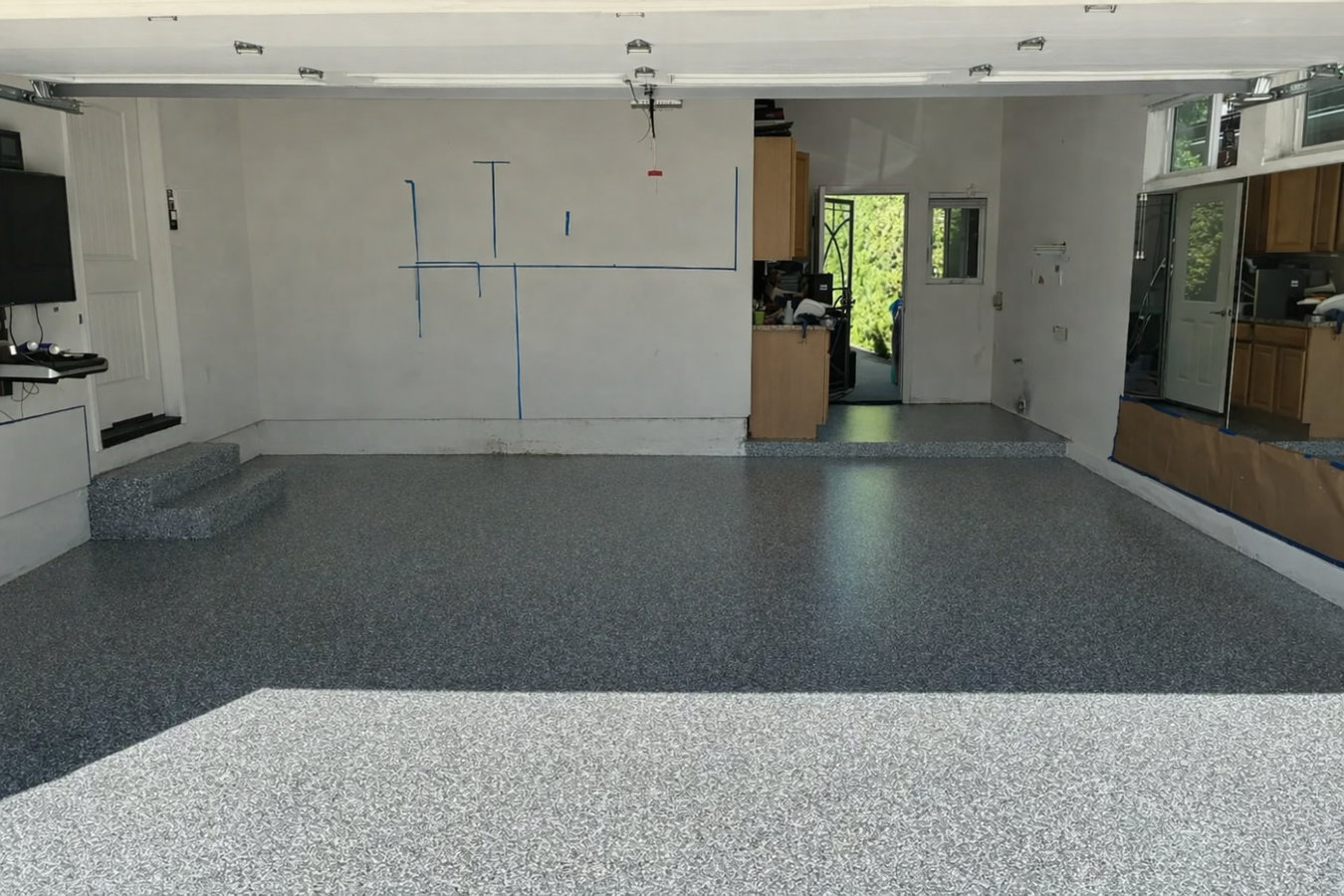
Cracked, hollow, or spalling basement or garage floor? We pour concrete floors with the right base, thickness, and curing methods for Montana winters - so you get a floor that holds up, not one you patch every spring.
Concrete floor installation in Great Falls starts with base preparation - compacting the ground, grading for drainage, and setting reinforcement - then pouring and finishing the slab in a single day. Most residential floors are ready for light foot traffic within 48 hours and normal use within about a week.
A lot of Great Falls homes were built in the mid-20th century, and many have basement or garage slabs poured to older standards - thinner, with little reinforcement, and sometimes no proper gravel base underneath. If your floor is cracking, hollow-sounding, or showing moisture issues, those are signs the original pour is failing - not just the surface. The right fix is a properly built replacement, not another round of patching.
Homeowners finishing a basement often combine new concrete floor installation with garage floor concrete work at the same time - getting both spaces done while the crew is already on-site saves time and often reduces overall cost.
Small hairline cracks are common and often harmless. But if a crack is getting wider, longer, or one side sits higher than the other, the slab underneath is moving. In Great Falls, this kind of movement is often tied to seasonal soil shifts or frost heave, and it tends to get worse each winter if left alone.
Walk slowly across your concrete floor and listen. If certain spots sound hollow when you step on them, the concrete has separated from the ground beneath it. This is a common result of soil erosion or poor base preparation, and it means the slab has no support in those areas - making it more likely to crack under load.
If the top layer is peeling away in chips or turning gritty when you sweep it, the surface is spalling. In Great Falls, this is often accelerated by road salt tracked in from driveways during winter combined with the freeze-thaw cycle. Once spalling starts, it spreads - patching only delays the inevitable.
White chalky streaks on a basement or garage floor are mineral residue left when water moves through the concrete and evaporates. It means water is getting in. Great Falls spring snowmelt can push groundwater up through older slabs not sealed or poured with adequate drainage in mind - ongoing moisture is a sign the floor may need replacing rather than patching.
We pour concrete floors for garages, basements, utility rooms, workshops, and outbuildings throughout Great Falls and the surrounding area. Every project starts with proper base preparation - compacted gravel, correct drainage grade, and moisture barrier where needed. We set the slab thickness based on the actual use of the space: four inches for most residential floors, thicker for areas carrying heavy equipment or vehicles. We also handle removal of old floors when needed, so you have a single contractor managing the full job.
For homeowners who want a finished look, we offer broom, trowel, and decorative finish options. If you are looking for an outdoor extension of your project, our concrete pool decks service brings the same base prep and curing standards to outdoor slab work. Every interior floor we install is sealed or sealed-ready to protect against the road salt and moisture that Great Falls winters bring indoors.
Four-inch slab with broom or trowel finish, sealed for road salt resistance - suited for daily vehicle use and Montana winters.
Full tear-out and replacement for older slabs showing cracking, spalling, or moisture issues - with proper drainage and base work.
Thicker slabs with higher-strength mix for spaces carrying heavy equipment, workbenches, or stored materials.
Great Falls is one of the windiest cities in Montana, and that wind pulls moisture out of fresh concrete faster than almost any other weather condition. When the surface dries faster than the concrete underneath, it cracks before fully curing. Good local contractors use curing blankets and windbreaks to protect the fresh slab during those critical first hours - a step that is easy to skip but makes a real difference in how long the floor holds up. The Portland Cement Association provides guidance on curing in high-wind conditions that any serious contractor in this region should know and follow.
Parts of Great Falls sit near the Missouri River floodplain, where soils include silty and expansive clay layers that shift with moisture changes. When the ground beneath a slab moves, the slab moves with it. A contractor who knows local soil conditions will assess whether your specific lot needs extra base work or a thicker slab before any concrete is poured. Homeowners in Anaconda and Billings face similar older-housing and soil challenges - base prep standards that matter here matter across Montana.
We respond within 1 business day. We will ask about the space size, its intended use, and whether there is an existing floor that needs to come out. Then we schedule a free on-site visit - conditions vary too much to quote accurately over the phone.
We visit your property, check the existing floor or ground, assess drainage, and determine what base preparation is needed. We also ask about your timeline, because weather windows matter in Great Falls and scheduling a pour during a cold snap or high winds can affect the outcome.
If a permit is required, we handle it. We then clear the area, remove any old floor if needed, compact and grade the base, set reinforcement, and pour. The actual pour and finishing usually takes one full day. We protect fresh concrete from wind and temperature swings with curing blankets if conditions call for it.
You can walk lightly on the floor after 24 to 48 hours, but we will tell you when it is safe for vehicles and heavy use - typically around seven days. Before we leave, we walk the finished floor with you, cover care instructions, and discuss sealing options for garages and basements.
We respond within 1 business day. No obligation - just a written estimate after we see the actual space.
(406) 216-6060Every concrete floor project is covered by liability insurance and workers compensation. If a permit is required through the City of Great Falls, we pull it before work begins - so the job is inspected and documented, which protects you at resale.
We are a local company that knows Cascade County soil conditions, the Missouri River floodplain clay layers, and the freeze-thaw patterns that stress slabs here. We pour floors for this climate, not a national average.
The ground underneath a slab matters as much as the concrete itself. We compact the base, grade for drainage, and account for local soil conditions before any concrete is poured - because a floor is only as stable as what is beneath it.
Great Falls is one of the windiest cities in Montana, and wind pulls moisture from fresh concrete faster than almost any other condition. We use curing blankets and schedule pours to protect the surface during those critical first hours - a detail that separates a lasting floor from one that cracks in year two.
We are a local Great Falls company serving 12 Montana cities, and we bring the same base prep, curing, and sealing standards to every floor we install. When the season is short and the weather is unforgiving, hiring a contractor who actually knows this climate makes a real difference in the result.
Slip-resistant concrete pool deck surfaces that stay level and safe through Montana temperature swings.
Learn moreDedicated garage floor concrete with finishes built to resist road salt, oil, and heavy vehicle weight.
Learn moreGreat Falls installation windows are short - contact us now to lock in your spot and get a floor poured before the weather turns.