Loading...
Serving Great Falls, MT and surrounding areas. (406) 216-6060
Leaning posts, sticking doors, or starting a new deck or addition? We dig below the Great Falls frost line, pour reinforced footings, and handle the permits - so your structure stays solid through every Montana winter.
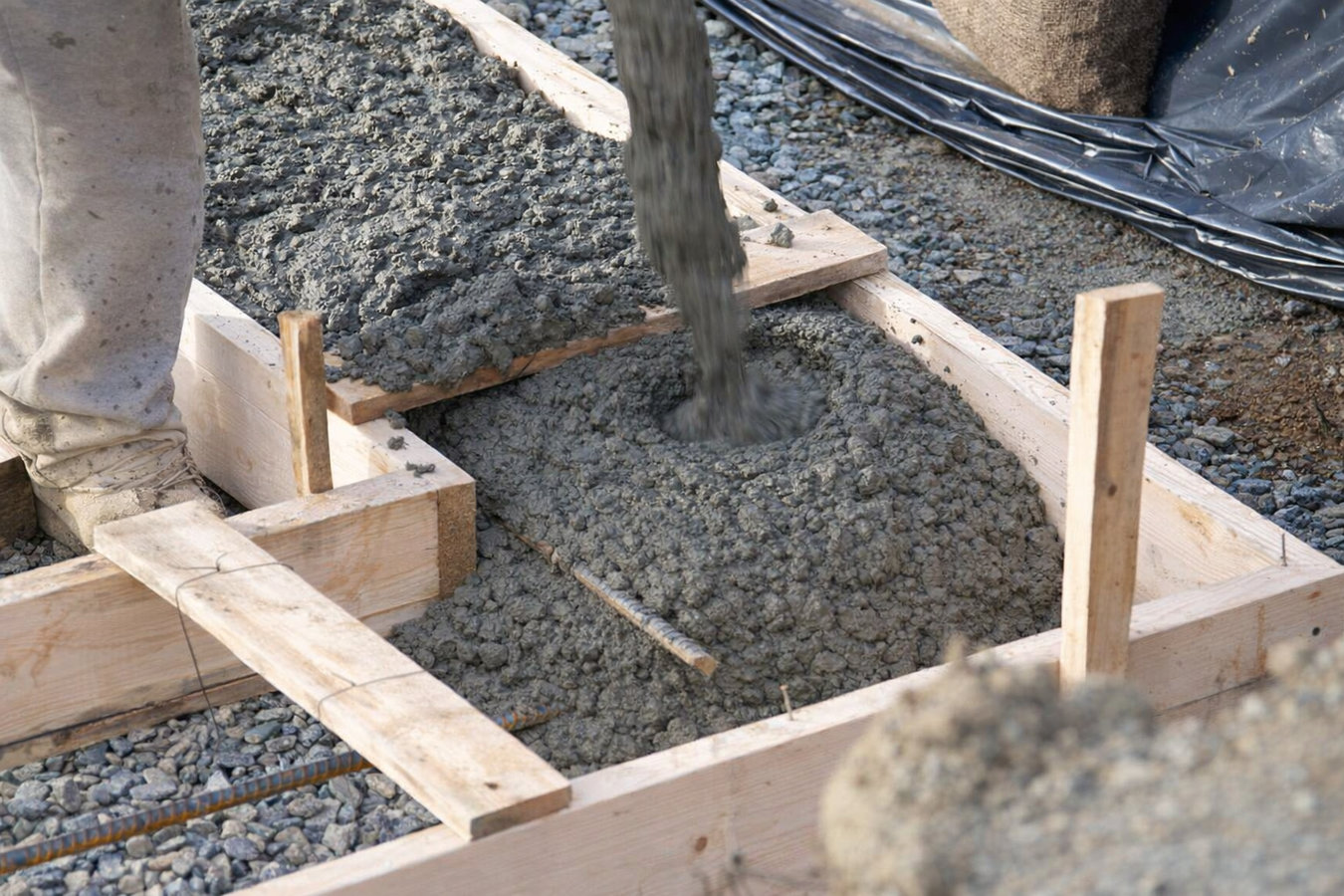
Concrete footings in Great Falls means excavating below the local frost line - typically around 48 inches - forming and reinforcing the holes with steel rebar, and pouring concrete that locks your structure in place regardless of how many times the ground freezes and thaws. Most residential footing projects take one to two days of on-site work plus a week of curing before framing begins.
A footing is the buried base that holds everything above it - your deck posts, porch columns, garage walls, or addition framing. You never see it when the job is done, but without it done correctly, everything above shifts over time. In Great Falls, where the ground can freeze to depths that push shallow footings right out of position, depth is not optional.
For larger projects involving a full foundation wall or full foundation installation, footings work as the first layer of a larger system - and we handle both scopes so everything is engineered to work together from the start.
If your deck posts are no longer perfectly vertical, or you can see a gap opening between the deck ledger and your house, the footings underneath may have shifted. In Great Falls, this often happens after a hard freeze-thaw cycle works on a footing that was not buried deep enough. A leaning post means the structure above it is no longer fully supported - do not wait on this one.
When a footing moves, even slightly, the framing above it moves too. If a door in your garage, sunroom, or addition has started sticking, or you notice diagonal cracks from the corners of door or window frames, something below has shifted. This is common in Great Falls homes where additions were built with shallower footings than today's frost depth requirements demand.
Any structure carrying significant weight needs proper footings before a single board goes up. If you are in the planning stage for a deck, garage, or room addition, now is the time to think about footings - not after the framing crew shows up. Getting this step right from the start is far less expensive than fixing a settled structure later.
Visible cracking or spalling - where the surface of concrete flakes or chips away - at the base of a wall or column can mean the footing beneath it is deteriorating. Concrete poured in cold weather without proper protection can break down over time. In Great Falls, where winters are hard and long, this kind of wear shows up faster than in milder climates.
We install concrete footings for decks, porches, garages, room additions, outbuildings, and any structure that needs to stay level through Great Falls winters. Every project includes excavation to the required frost depth, steel rebar reinforcement inside the forms, a correctly mixed and poured concrete batch, and cleanup of the site when we are done. We pull the required permits and coordinate the city inspector visit before any concrete goes in - so you have an independent record that the work was done to local code.
For projects that need both footings and a full foundation raising or repair scope, we assess both needs during the same site visit so you get a clear picture of the whole project before any work begins. Combining scopes when possible reduces total downtime and keeps your schedule on track.
Best for homeowners building or replacing a deck, covered porch, or pergola where individual post bases need to be set below frost depth.
For room additions, garages, or load-bearing walls that need a trench footing running the perimeter of the new structure.
For older Great Falls homes where existing footings may be undersized or too shallow to safely support a planned addition or renovation.
Great Falls sits in a climate zone where the ground can freeze to around 48 inches in a hard winter - deeper than most of the country. The frost heave problem is real here: wet soil expands when it freezes, and a footing that does not reach below that depth gets pushed upward season after season until the structure above it tilts or cracks. Soils across Cascade County are also variable - some neighborhoods have rocky glacial till just below the surface, others have river alluvium near the Missouri that holds moisture and puts extra pressure on anything buried in it. A contractor who asks about your soil conditions before quoting is doing the job correctly; one who gives you a number without looking is guessing. The American Concrete Institute and University of Minnesota Extension both publish frost depth guidance that informs how we spec every footing we dig.
A significant share of Great Falls homes were built in the 1940s through the 1960s, when footing depth requirements were less stringent than they are today. If you are adding onto an older home or attaching a deck to a house from that era, it is worth having the existing footings assessed before framing starts. Property owners in Havre and Lewistown deal with the same frost depth requirements and older housing stock - and we bring the same local knowledge to both communities.
We respond within 1 business day. We will ask what you are building, roughly where it goes, and whether you have existing plans. This helps us know whether we need a site visit before quoting, or whether we can give you a useful ballpark right away.
For most footing projects we visit in person to check access, soil conditions, and any obstacles like buried utilities or tree roots. After the visit you receive a written estimate that covers excavation, forming, concrete, steel reinforcement, and cleanup - with every line item spelled out.
We pull the required City of Great Falls building permit and coordinate the city inspector's visit before any concrete goes in. The inspection typically takes a day to schedule and protects your investment by confirming depth and setup are correct.
After the pour the crew cleans the site and removes all materials. We give you a clear curing timeline - typically five to seven days before framing can begin - so your project does not stall waiting on concrete that is not ready yet.
No obligation. We visit your site, check soil conditions, and give you a line-item quote that covers excavation, forming, concrete, and cleanup - before any work is scheduled.
(406) 216-6060We pull the required City of Great Falls building permits and coordinate the inspector's visit before we pour. You never have to make a single call to the city - and when you sell your home, the permitted record is already there.
We work across north-central Montana and know the frost depth requirements, soil variability, and scheduling realities that come with this region. Local knowledge is not a talking point - it affects every footing we dig.
Rocky or clay-heavy soil - common across Cascade County - affects excavation time and cost. We assess your site before we commit to a price, so the number you agree to reflects what is actually there, not a guess.
We excavate to the local frost line requirement on every project - not the minimum that might pass in a warmer climate. A footing above the freeze line in Great Falls will move. Ours do not.
Every footing we pour in Great Falls is dug to the correct depth for this climate, reinforced with steel, and inspected by the city before concrete goes in. That is not extra - it is the minimum that actually holds up through a Montana winter, and it is what we deliver on every job.
Lift and stabilize a settled foundation so your home returns to its original level without full replacement.
Learn moreFull foundation installation for new builds and additions, including excavation, forming, and reinforced pours.
Learn moreLocal contractors book up fast once the ground thaws - reach out now and get your project on the schedule before summer fills up.